
Above a certain size a boat stops being a boat policy question and becomes a yacht policy question, and a great deal of what floats in Collier County sits above that line. Naples City Dock, Royal Harbor, the canals off Aqualane Shores and Port Royal, the marinas on Marco Island. The clauses that decide a claim here are not the ones that decide a trailer boat claim inland, and they are almost never read before they matter. This page is about the four that do the deciding.

Agreed value on a hull the market cannot easily price.
On a larger or unusual hull, actual cash value is not a settlement basis so much as an invitation to argue. Comparable sales are thin, condition is contested, and after a storm that damaged many boats at once the market you are being valued against is a market in disarray. Agreed value fixes the figure when the policy is written and removes all of that.
The related question is what happens to a partial loss. Some carriers depreciate specific components regardless of the hull settlement basis, and on a well-equipped boat the canvas, electronics, tenders and outboards are where the money is. Ask what the partial-loss language says, not just the headline basis.
Lay-up, navigation and the warranties that quietly govern the policy.
A lay-up warranty is a stretch of the year the boat is meant to be out of the water or not in use, in exchange for a lower premium. A navigational limit draws the water you are covered on, sometimes with a southern boundary that excludes the Bahamas unless it has been added. Both are warranties rather than suggestions, and both are commonly breached by an owner who has no idea they exist.
The two most frequent ways they are breached in Naples: a boat bought elsewhere and brought here on the old policy, whose limits describe a use that no longer applies; and a crossing planned in a season the policy quietly excludes. Both are cheap to fix in advance by endorsement.
Crew, salvage, and wreck removal.
If anyone is paid to work aboard, even occasionally, that is a crew exposure and a standard pleasure-use policy is not written for it. Captain warranties, named-operator conditions and Jones Act exposure all appear at this end of the market, and none of them is obvious from the declarations page.
Salvage and wreck removal are the other pair worth naming. Salvage is priced on the difficulty of recovering the vessel rather than on what it is worth, and wreck removal can be a legal obligation whether or not you want the boat back. A policy that ties salvage to a small percentage of hull value looks very different in October than it does in February.
Berths, from the City Dock to Marco.
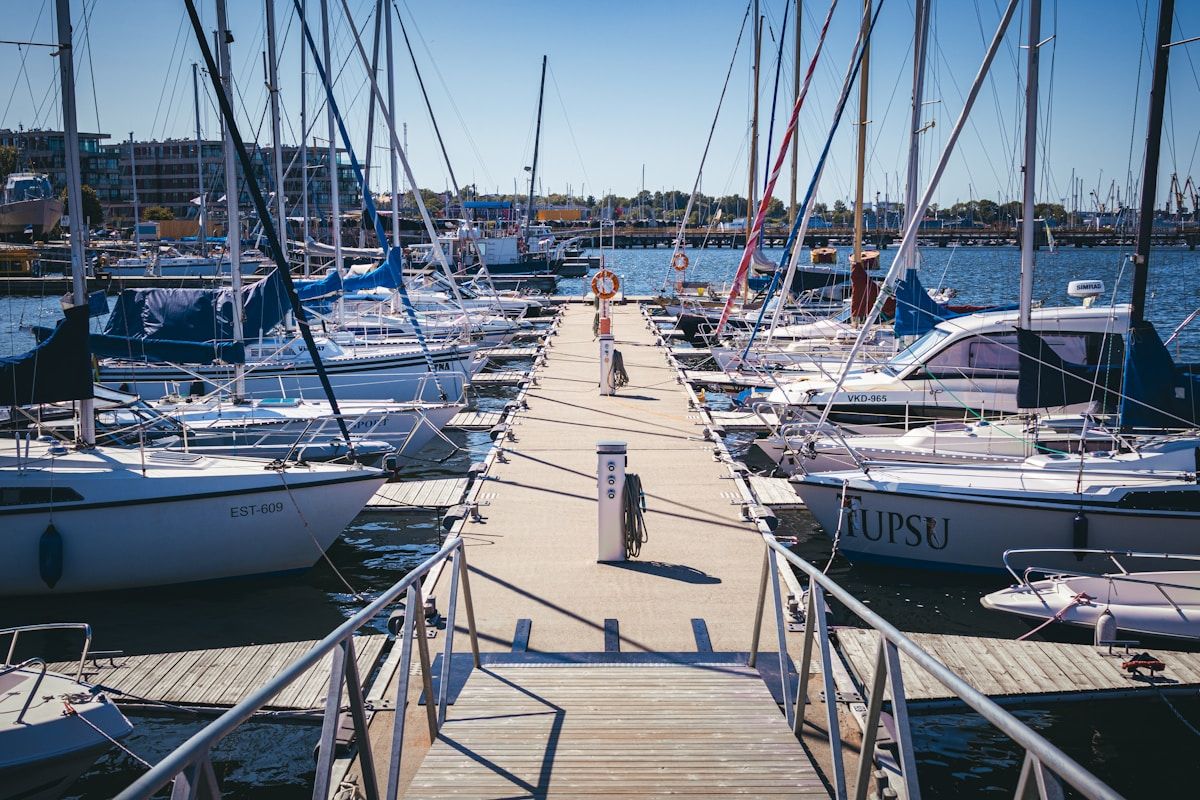
Where the boat sleeps is a contract before it is a view. A slip at Naples City Dock, a berth up Gordon River, a canal-side spot in Royal Harbor, a Marco marina, every one of them comes with a berthing or storage agreement, and those agreements have grown teeth. Marinas now routinely require proof of liability at their stated limits, ask to be named as additional insured, and disclaim their own responsibility for your vessel in language worth reading twice. The agreement and the policy need to be introduced to each other before the season, because the marina office will ask for the certificate at the least convenient moment otherwise.
The berth also quietly shapes the coverage itself. A boat on a floating dock in a well-protected basin and the same boat on an open T-head are different storm risks; a covered rack changes the theft and sun calculus; and the hurricane plan the policy asks about has to name real places, where the boat goes, who moves it, what the marina’s own storm policy compels. Marinas increasingly have mandatory evacuation or haul-out rules of their own, and your insurer’s plan and your marina’s rules should agree with each other.
We keep certificates for half the docks in this county on file already. Tell us where the boat lies, send the marina’s insurance page, and the paperwork side of your berth becomes our problem, which is, genuinely, the correct allocation of labour.
The delivery south, and who is at the helm.
Every autumn a fleet migrates to Collier County, down the Intracoastal, around from the east coast, or on a truck, and every delivery is an insurance event before it is a voyage. The questions are specific: does the navigational territory cover the delivery route, including states and waters the policy never otherwise sees? Is coverage in force during trucking, or does the hauler’s own insurance carry the risk, and to what limit? And above all, who is at the helm, because a paid delivery captain is precisely the kind of operator a private pleasure policy may not contemplate without being told.
The named-operator and paid-crew questions deserve straight answers rather than assumptions. Some policies cover any competent operator with permission; others name who may run the vessel; professional skippers carry, or should carry, their own coverage that layers with yours. Sorting this takes one conversation and a copy of the captain’s certificate of insurance. Failing to sort it converts a routine delivery scrape into a coverage argument spanning three parties and two states.
The same logic applies in miniature all season: the friend who runs the boat back from lunch, the dockhand who repositions it, the broker who shows it. The policy has opinions about all of them. Ten minutes with us in October, when the boat comes south, settles the year.
Chartering it, even once.

Sooner or later someone suggests the boat could earn its keep, a charter here and there, a peer-to-peer rental listing, the neighbour’s standing offer. The insurance answer is blunt: a private pleasure policy is written for private pleasure, and taking money for the use of the vessel generally lands outside it. That is not a technicality that adjusters overlook; charter activity is among the first questions asked after a loss, and an undisclosed commercial use is the cleanest coverage defence an insurer ever gets.
None of which means the idea is dead, it means the idea is a different policy. Legitimate charter operations run on commercial marine coverage shaped to the operation: six-pack day charters, bareboat arrangements, crewed weeks. The rules differ, the licensing differs, and the premiums reflect that a paying stranger aboard is a different risk from a family Saturday. The peer-to-peer platforms’ own protections vary enormously and read very differently from their marketing.
Our role is not to talk anyone out of chartering. It is to make sure the first paid trip happens inside a policy built for it. If the boat is going to work, even occasionally, say it plainly at the quote, the honest version of this conversation is short, and the dishonest version ends in the one place nobody wants to be, which is uninsured on the water with a paying passenger.
The survey: what the underwriter reads in it.
On the hulls this coast is known for, the marine survey is the document the whole insurance conversation stands on. Underwriters read it the way lenders read an appraisal: for condition and valuation, but also for the recommendation list, the surveyor’s catalogue of what should be corrected, ranked by urgency. Policies on larger vessels commonly require the priority recommendations to be completed within a stated period, and quietly make that completion a condition the claim file will revisit. A survey filed and forgotten is a coverage argument waiting for its moment.
Timing and scope both matter. Surveys age; a policy placed on a five-year-old survey may be repriced or re-conditioned when a fresh one is finally demanded, and a change of ownership almost always resets the clock. Out-of-water matters too: a hull inspected only afloat leaves questions below the waterline that underwriters do not extend the benefit of the doubt on. For an agreed-value policy the survey carries extra weight, because it is the document the agreed value was agreed against.
Our practical counsel to owners is unglamorous filing discipline: keep the survey, the completion receipts for its recommendations, and the equipment list current and in one place, ours, ideally. When the claim comes, or the renewal tightens, the owner whose paper is in order gets outcomes the disorganised owner does not, at identical premium. It is the cheapest advantage on the water.
The uninsured boater, and the collision that motors away.
Florida requires no insurance to operate a boat, and the water off Naples carries the consequence every weekend: hulls of every size, some insured like the assets they are, some not insured at all. When the at-fault boat is bare, or simply gone, the hit-and-run is not a road-only phenomenon, the paying part of the claim falls back on your own policy, and the coverages that answer are the ones chosen years earlier without much thought: uninsured-boater liability for injuries, your own hull cover for the fibreglass, medical payments for the guests aboard.
Uninsured-boater coverage deserves particular attention on this coast because the injury side is where the exposure lives. A collision that hospitalises a passenger produces bills that dwarf gelcoat repair, and if the responsible operator has neither insurance nor collectible assets, the recovery conversation is short. The coverage is cheap, the limits are selectable, and the difference between carrying it and not is discovered exclusively after the fact.
The prevention layer is procedural: on any incident, treat the water like a highway. Names, registration numbers, photographs, witnesses from nearby boats, and a report to wildlife officers or the Coast Guard where the incident warrants it, because documentation is what converts a bad afternoon into a payable claim. Then call us before anyone’s insurer calls you. The office has walked owners through exactly this, and the sequence matters.
The same documentation habit pays at the dock. Before guests board for the season’s first run, photographs of the hull, the electronics and the dock lines cost nothing and date-stamp the boat’s condition; after any incident, the same camera is the first tool out of the locker. Marine claims are won on paper more often than owners expect, and the owner who arrives with photographs, receipts and a current equipment list is simply a shorter conversation. The habit costs one unhurried hour at the start of the season, which is less time than a single disputed claim spends on hold, and it is the hour this office most consistently wishes more owners had spent.
Two steps, no obligation. The request arrives with this line already on it, so we quote what you have been reading about first.
Starts with Boat Insurance in Naples, FL
Prefer to walk in? No appointment needed during opening hours.
We place boat cover with fourteen carriers.
Which of them fits depends on where it is kept and how far it travels.














Boat questions we are asked in Naples.
If yours is not here, call the office. Someone will pick up.