
Commercial is written from the home office at 3049 Cleveland Avenue North, and in Lee County most of it is written for people who work with their hands: roofers and framers still busy on the rebuild, air conditioning and plumbing outfits, landscapers, electricians, and the storefronts along Cleveland and Colonial. This page is about the three things that actually decide whether a small Southwest Florida business is properly covered, and about the certificate that stops a job on its first morning.
Workers compensation begins earlier than you think.
For most non-construction employers the requirement starts at four or more employees. For construction it starts at one. That single difference catches Lee County trades every year, because a two-person roofing outfit is in scope where a two-person shop generally is not.
Officers and LLC members can file for exemption, within limits and with different rules in construction, but an exemption removes the person from the requirement rather than giving them any benefit: an exempt owner injured on a job has no claim to make. And no exemption covers a subcontractor, so a sub without their own cover can make their employees your responsibility, usually discovered at audit.
The certificate, and what it does not do.
A certificate of insurance evidences that policies existed on the day it was issued. It is not the policy, it does not amend it, and it confers no rights on the holder. Which means it cannot make anyone an additional insured: that comes from an endorsement, and the certificate merely reports the endorsement exists.
Send us the insurance clause before you sign, not after. Contracts on the larger Lee County jobs routinely want additional insured status, primary and non-contributory wording and a waiver of subrogation, all of which are endorsements and all of which affect the premium. Finding that out on the first morning of a job is expensive.
Vehicles, tools and what a storm costs you.
If staff drive their own vehicles on company business, hired and non-owned auto is the coverage that answers, and a personal policy will not. Tools and equipment on a truck overnight are an inland marine question rather than a property one, and the limits people carry are usually the ones they set when the business was half its current size.
Business interruption is the other one worth naming here. It replaces income while the premises are repaired, but the trigger is normally direct physical damage to your property, so closing because the power is out or the road is shut needs the utility services and civil authority extensions to respond. Those are frequently optional and frequently absent.
The rebuild economy, and the paper it runs on.
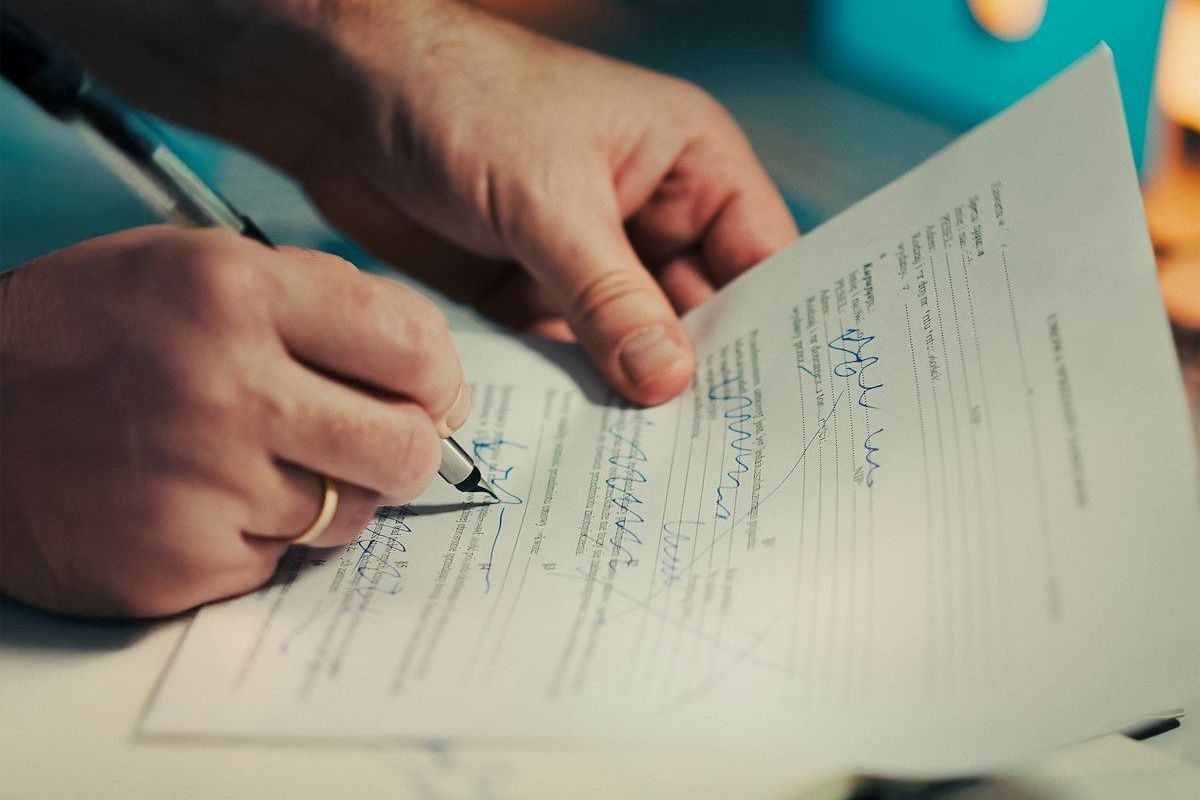
Years after Ian, a meaningful share of Lee County’s economy is still construction: roofers, general contractors, remodelers, tradesmen who came for the rebuild and stayed. Every one of those businesses runs on a chain of paper as much as on labour, the general contractor requires certificates from every sub, the sub’s policy must actually match what the certificate claims, and one uninsured link exposes everyone above it. We spend a serious fraction of every week issuing certificates and reading other people’s, and the reading matters more than the issuing: a certificate proves a policy existed on the day it was printed, and nothing else.
The project itself needs its own thought. General liability follows your operations; it does not insure the half-built structure. That is builder’s risk, a policy on the work in progress, its materials on site and often in transit, from groundbreaking to certificate of occupancy. Owners assume the contractor carries it; contractors assume the owner does. The truthful answer is that it belongs to whoever the contract says, which is one more reason the contract should visit our desk before it is signed.
And because this is a licensed trade economy, exclusions deserve respect. Policies in the construction market carry exclusions worth understanding before a claim, not after, work on roofs above certain heights, certain exterior finishes, prior-work provisions. None of them is a reason to panic. All of them are reasons to describe your actual operations honestly at the quote, because coverage priced on the wrong description is not really coverage.
The lease made promises on your behalf.
Most Fort Myers business insurance conversations start with a lease. The suite on Cleveland, the bay off Metro, the kiosk in the plaza, the landlord’s lease almost always contains an insurance clause, and that clause is a set of promises you have already made: liability at specified limits, the landlord named as additional insured, sometimes a waiver of subrogation, sometimes plate glass. Signing a lease and buying insurance separately, without either document reading the other, is how a tenant ends up out of compliance with an agreement they never fully read.
The clause is rarely negotiable, but it is always satisfiable, and usually cheaply, additional-insured status for a landlord is ordinary business. The expensive version of this story only happens in one order: something breaks, the landlord’s carrier pays, and then comes looking for the tenant whose policy was never set up to respond. Ten minutes with the lease at the quote prevents the whole plot.
Tenants also chronically under-think their own side of the doorway. The landlord insures the building; everything from the paint inward is usually the tenant’s problem, the improvements you built into the suite, the equipment, the inventory, the income that stops when the space is unusable. A tenant policy that lists a liability limit and nothing else has answered the landlord’s question and ignored yours.
The liabilities that arrive by email.

The newer risks in a Lee County business do not come through the front door. A bookkeeper’s inbox is phished and a vendor payment goes to a stranger’s account; a customer database leaks; a dismissed employee alleges discrimination. None of these are covered by general liability, which insures bodily injury and property damage, categories an email never touches. The policies that answer are cyber liability and employment practices liability, and they have moved in a decade from exotic to ordinary for exactly the businesses this county runs on.
The uncomfortable truth about both is that the businesses most exposed are the ones that assume they are too small to matter. Fraudulent-transfer schemes target the twelve-person contractor precisely because the controls are informal; employment claims do not require an HR department to exist, only an employee. Neither policy is expensive at small-business scale, and both are commonly bolted onto a package rather than bought alone.
We do not push either one by default. What we do is ask the questions that reveal whether the exposure is real, who moves money, what data lives where, how many people are on payroll, and then show the price beside the risk. Most owners, seeing both numbers, make the decision quickly in one direction or the other. The failure mode is never having seen the numbers.
Property in the open: yards, signs, and the fence line.
Along the industrial corridors off Metro and Alico, a lot of Lee County commerce lives outdoors: the equipment yard, the material stacks, the fleet parked inside a fence, the pole sign that announces the business to the highway. Standard commercial property forms are built around buildings and their contents, and property in the open is exactly where their assumptions thin out, distance limits from the premises, exclusions or sublimits for wind on outdoor property, and signs, fences and paving frequently needing their own scheduled cover.
The wind question is the one that stings here. Outdoor property provisions and windstorm language interact badly in a hurricane county: the forklift inside the warehouse and the same forklift in the yard can be two different claims. Businesses that live outdoors, equipment dealers, landscapers’ yards, contractors’ laydown areas, need those provisions read aloud before June, and equipment floaters shaped to where the iron actually sits.
The sign deserves a line of its own because every business has one and almost nobody insures it deliberately. A highway pole sign is expensive to replace and is commonly covered only by endorsement, at a stated limit. It is a two-minute question with your declarations page in hand, and after the next storm it is the difference between a nuisance and a five-figure surprise.
Fencing and paving quietly follow the same rule, and so does landscaping, which most forms treat generously in spirit and narrowly in numbers. The honest exercise for a business with real outdoor exposure is a walk around the property line with a camera once a year: photograph what is out there, price what it would cost to put back, and check the two lists against each other. Ten minutes of parking-lot photography has settled more property claims than any paragraph of policy language.
The package question: when a BOP fits, and when it stops fitting.
For a large share of Lee County’s small businesses, the right vehicle is a businessowners policy, the BOP, a package that bundles property, liability and business interruption into one form at a price the pieces could not match separately. The shop on the plaza, the office suite, the small showroom: this is what the package was built for, and when it fits, it fits well. We write them constantly and recommend them without hesitation in their lane.
The craft is knowing where the lane ends. BOPs carry eligibility walls, size, receipts, class of business, and edges where the bundled limits stop matching reality: the contractor whose real exposure is on other people’s job sites, the restaurant whose liquor sales outgrew the package’s appetite, the operation whose business-interruption needs deserve engineering rather than a formula. Outgrowing a BOP is a milestone, not a failure; staying in one past the fit is how a growing business ends up insured for the company it used to be.
The practical rhythm is a fit-check at renewal: what changed this year, headcount, receipts, services, locations, vehicles, and does the package still describe the business honestly? It is a fifteen-minute conversation at this desk, and the years it produces no changes are as valuable as the years it does, because both are the difference between a policy that tracks the business and one that merely renews.
The renewal conversation is also where gaps announce themselves politely instead of expensively. The van bought in March that never made it onto the auto schedule, the second location six months into its lease and uninsured, the new service line the liability form has never heard of: every one of these is a five-minute fix in the renewal meeting and a coverage dispute after a loss. Businesses outgrow policies constantly. That is what growing looks like. The only failure is letting the paperwork find out at claim time. Put the renewal meeting on the calendar the way the tax appointment goes on the calendar, annually and without debate, and the policy will keep pace with the business without anyone having to be brave about it.
Two steps, no obligation. The request arrives with this line already on it, so we quote what you have been reading about first.
Starts with Commercial Insurance in Fort Myers, FL
Prefer to walk in? No appointment needed during opening hours.
We place commercial cover with fourteen carriers.
Which of them fits depends on where it is kept and how far it travels.













Commercial questions we are asked in Fort Myers.
If yours is not here, call the office. Someone will pick up.