
The homeowners department is in Suite 231 at 3049 Cleveland Avenue North, in the same building as the home office, and it writes property and nothing else. That is why roof age and wind mitigation get read properly here rather than skimmed. Lee County rebuilt after Ian, and the rebuild left a county full of newer roofs whose owners never filed the paperwork that would prove it. This page is about that, about the take-out letters landing now, and about the manufactured-home market nobody local writes about.
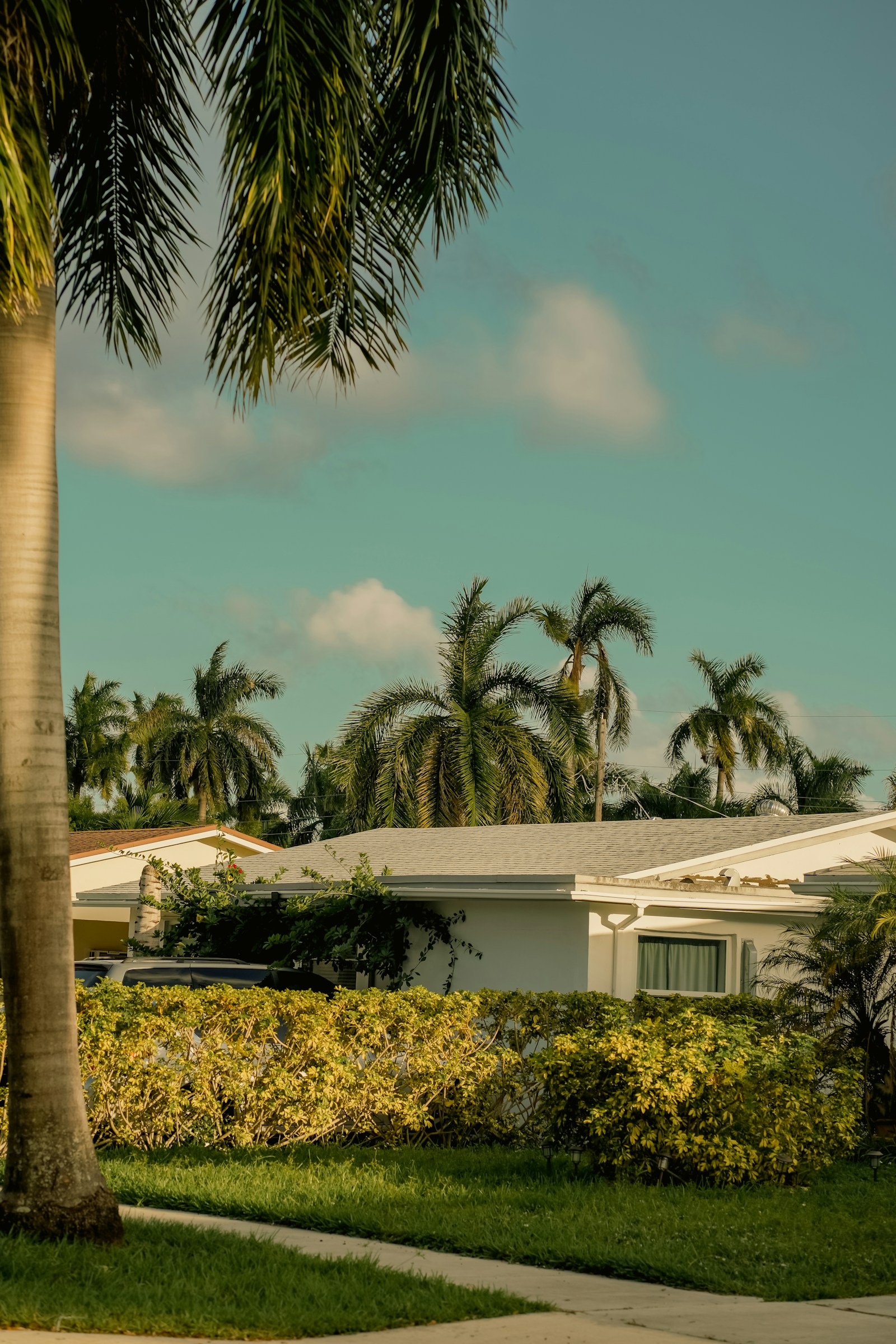
Roof age decides more than anything else on the property.
A Florida property carrier is, in practice, in the business of paying for wind damage, and wind damage arrives through the roof. Several carriers will decline a Lee County risk on roof age alone before looking at claims history or anything else, and thresholds differ by carrier and by covering, so two neighbours with roofs of the same age get different answers.
If your home was rebuilt or re-roofed after Ian, the permit or invoice establishing the year is worth having to hand. Without it an underwriter estimates from the county record, and the estimate will not be generous. A wind mitigation inspection on form OIR-B1-1802 documents deck attachment, roof-to-wall connection and opening protection, and those credits are real money on a Lee County premium.
The four-point, and what an older home has to prove.
On a home past a certain age most carriers want a four-point inspection: roof, electrical, plumbing and HVAC. It is not a home inspection and it is not looking for everything; it is looking for the four systems that cause the claims, and for the specific things that make a house uninsurable, such as certain older wiring or polybutylene supply lines.
A four-point that comes back with a finding is not the end of it. It is a list, and most of what is on it is fixable. Knowing before you shop is far better than discovering it during underwriting with a closing date in the calendar.
Take-out letters, and manufactured homes.
If you are with Citizens, expect letters. Private carriers are approved in tranches to assume Citizens policies, and for many offers doing nothing means the transfer proceeds. There is also an eligibility rule: an offer within a defined margin of your Citizens premium can end your eligibility at renewal whether you accept it or not. Bring the letter in before you respond and we will read it against your current declarations page.
Manufactured and mobile homes are a real Lee County market and are written on their own forms rather than on a standard homeowners policy, with their own rules on tie-downs, age and roof. If you own one in North Fort Myers or out towards Lehigh Acres, that is a conversation worth having with somebody who writes them regularly.
The takeout letter, decoded.

If a letter from Citizens has reached your kitchen table offering to move your policy to a private carrier, you are part of a deliberate, statewide program: Citizens is shrinking on purpose, and tens of thousands of Southwest Florida policies are being assumed by private companies, Mangrove Property Insurance and Florida Peninsula among the largest recent participants. The letter is real, the deadline in it is real, and doing nothing is itself a choice: let the window pass and the assumption typically proceeds.
What the letter does not do is compare the two policies for you, and that comparison is the entire decision. The private offer may cost more, the same, or occasionally less. It may match your Citizens coverage or differ in the places people do not read: the hurricane deductible, the roof terms, the water-damage sublimits. And there is a wrinkle worth knowing before you decline casually, eligibility rules can make it harder to stay with or return to Citizens when a comparable private offer exists. Declining is sometimes right, but it should be an informed refusal, not a reflex.
This is a twenty-minute appointment with both documents on the desk. Bring the letter and your current declarations page, and we will read them side by side: premium against premium, deductible against deductible, and the coverage differences in plain terms. Then the choice is genuinely yours, made before the deadline instead of by it.
Wind mitigation: the discount hiding in your roof.
Florida law requires carriers to credit homes for features that resist wind, and the credits run deeper than most Lee County owners realise. They attach to specifics: how the roof deck is nailed, whether the roof-to-wall connections are clips or straps, the shape of the roof itself, a hip roof out-earns a gable, and whether openings carry rated protection. None of that is visible from the street, which is why the credits go unclaimed. The document that proves them is a wind mitigation inspection, reported on the state form OIR-B1-1802.
On a newer home the inspection frequently pays for itself several times over in the first year, because anything permitted under the post-2002 code generation tends to score well. On an older home the result is more mixed but rarely worthless, and it doubles as a map of the cheapest upgrades, because it shows exactly which missing feature is costing what. Owners who re-roofed after Ian are the group most likely to be leaving money unclaimed: a new roof usually means new attachments, and the credits do not apply themselves. The inspection has to say so.
We read these forms every week. If you have one, send it with your quote request and we will make sure every carrier we approach prices it. If you do not, we will tell you honestly, based on the age and shape of the house, whether it is likely to earn back its fee, and point you to inspectors who do it properly.
Manufactured homes, from North Fort Myers to Suncoast.

Lee County has one of the larger manufactured-home populations in Florida, the communities along 41 through North Fort Myers, the parks off Bayshore and Littleton, the acreage setups further east, and insuring these homes is its own discipline, not a smaller version of site-built homeowners. The policy forms are different, the carriers are different, and the underwriting turns on details site-built policies never ask about: the tie-down system, the age of the home, whether it sits on owned land or a leased lot, and what has been added since it was set.
The additions matter more than owners expect. Carports, lanais, screen rooms and sheds are usually covered differently from the home itself, sometimes at a fraction of their replacement cost, sometimes only by endorsement, occasionally not at all. After a storm this is the gap that surprises people, because the attached structures are precisely what Southwest Florida weather takes first. Knowing how yours are treated is a five-minute read of the policy that we will happily do with you.
The market for these homes has fewer carriers than site-built, but it is a real market and we place in it steadily. Age cutoffs exist and vary by carrier; a home that one company will not touch, another writes as ordinary business. If you have been told your home is too old to insure, that is a statement about one carrier’s appetite, not about the market. Bring the details and let us test it properly.
The claims that start small: water lines, water heaters, and time.
Hurricanes get the headlines, but the claim a Lee County home is most likely to actually file starts at a supply line. The washing-machine hose, the water heater past its expected life, the slow leak under a slab, non-weather water is among the most frequent and most quietly expensive categories of home claim in Florida, and it is the one the market has responded to most aggressively. Many policies now carry specific water-damage provisions: sublimits, older-home restrictions, sometimes optional endorsements that restore fuller cover for a price.
This is a place where reading the policy beats trusting the summary. Two homes on the same street can carry water provisions so different that the same burst line produces a routine claim at one address and a fight at the other. Age of home, age of systems and claims history drive what carriers offer, which is also why the cheap quote is sometimes cheap: the water language is where the savings were found.
Prevention has an insurance angle too. Replacing the twenty-year-old water heater before it fails, putting braided lines on the washer, adding an automatic shut-off valve, these are the rare upgrades that both reduce the odds of a claim and, with some carriers, earn credits. We will tell you which of them your carrier actually rewards, and what your current policy would really do the morning the ceiling drips.
Two deductibles, and the one you choose twice.
A Florida homeowners policy carries two deductibles living very different lives. The flat all-perils deductible works the way people expect: a fixed figure off the top of an ordinary claim. The hurricane deductible is a percentage of the dwelling limit, not of the damage, and on a Lee County home insured at today’s rebuild costs, a few percent of the dwelling limit is a five-figure number. Homeowners meet this arithmetic for the first time at the worst possible moment, standing in a damaged house doing mental subtraction.
The percentage is a choice made at purchase and remade, mostly by inertia, at every renewal. A lower percentage costs more premium and bites less after a storm; a higher one is a legitimate savings strategy strictly for households holding real reserves against the bite. What it should never be is accidental, inherited from whatever the first quote defaulted to and renewed unexamined for a decade while the dwelling limit, and therefore the deductible, quietly grew.
Renewal is the moment to choose on purpose. The question is one sentence, what would this deductible cost us the morning after, and the answer is arithmetic we will happily do with you against the actual dwelling limit on the page. Ten minutes, once a year, and the storm-season surprise is retired from the household’s list of possible surprises.
There is a third deductible arriving in more Florida policies worth knowing by name: some carriers now offer or impose separate roof deductibles, another percentage, another line on the page, applying specifically to roof claims. Whether one belongs on your policy is a price-versus-exposure decision like the hurricane percentage, and exactly like it, the wrong way to hold one is unknowingly. When we review a policy at this desk, the deductible column is the first place we look, because it is where renewals change quietly. Ask for the plain-language version of yours at any renewal: which deductibles exist on the policy, what each would cost in dollars against the current dwelling limit, and which of them you actually chose on purpose. Three questions, one page, no jargon.
Two steps, no obligation. The request arrives with this line already on it, so we quote what you have been reading about first.
Starts with Home Insurance in Fort Myers, FL
Prefer to walk in? No appointment needed during opening hours.
We place home cover with fourteen carriers.
Which of them fits depends on where it is kept and how far it travels.














Home questions we are asked in Fort Myers.
If yours is not here, call the office. Someone will pick up.