
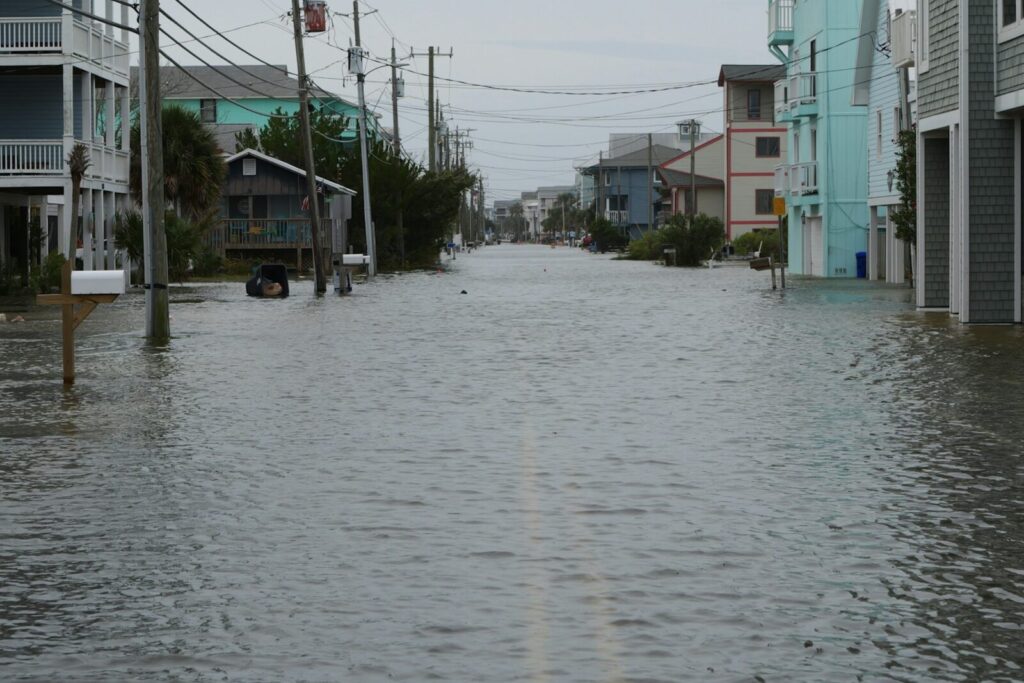
It is the sentence we say most often at the homeowners desk, and it still surprises people: your home insurance does not cover flood. Not because of anything unusual about your policy, but because no standard homeowners policy in the United States covers it. Flood is bought separately or not at all.
Where wind stops and flood begins
After a storm the line between the two decides which policy responds, and it is drawn by where the water came from rather than by what put it there. Rain driven through a roof the wind has opened is wind damage. Water that rose and came in from outside is flood, and storm surge is flood however hard it was blowing when it arrived.
That distinction is why two houses on the same street can have very different outcomes from the same night, and why a household with only one of the two policies can find the damage they actually suffered is the kind they did not insure.
What sets the rate
Flood is rated on its own terms, largely independent of everything that drives your home premium. The flood zone the property sits in, the elevation of the lowest floor relative to the expected flood level, whether the building has a basement or an enclosure below it, and increasingly the individual characteristics of the structure rather than the zone alone.
An elevation certificate is the document that establishes the second of those. It is not required for every policy, and where it is relevant it can change the figure considerably, in either direction. If your property has one, we want to see it before we quote.
Being outside a high-risk zone is not the same as being safe
A flood zone is a planning and lending instrument, not a promise. Water does not consult the map, and a meaningful share of flood claims in this state come from properties nobody required to carry the coverage. Outside a high-risk zone the premium is usually a good deal lower, which is precisely the case in which the coverage is easiest to justify.
We can quote flood through the National Flood Insurance Program or through a private carrier, and the two do not always agree on price for the same house. Ask us for both.